Decentralization and privacy: how digital analytics has changed, according to Adam Greco (Amplitude)
Before he became a product evangelist at Amplitude, Adam Greco had already dedicated well over 20 years of his life to digital analytics. Today, he still spends most of his time keeping a finger on the pulse of this ever-changing industry. His main conclusions? “When you look at the field as a whole, two major trends emerge. The first is a move towards increasing levels of data decentralization and democratization. The second is the growing awareness about the importance of privacy in a way that is quickly becoming undeniable.”

In our Eureka! series, Adam explained – among many other things – how digital analytics started as a way to measure ad performance and ROI, and how analytics programs eventually began tracking the way users were navigating through the website as well. He also discussed at length the shift from web analytics to product analytics. Now, we asked him about two other shifts that are shaping the industry: data decentralization and privacy awareness.
Shift 1: Towards data decentralization and democratization
Adam: “Back in the day, most people were pretty uncomfortable with data and analytics. As a result, organizations opted for a centralized approach to digital analytics, with a dedicated team of experts that could handle all requests. In some larger companies, that team could consist of more than 30 people. Often there would be a ticket system for employees to file requests. Weeks later, they would get their answer in the form of a report or a dashboard.”
“Today, that kind of lag would be unthinkable. To keep things tenable, more and more companies are therefore moving towards a decentralized model. One of the reasons they’re able to do that now is that the younger generation is much more familiar with data and analytics. Many even took SQL courses in college, which means they are a lot more comfortable with the technical aspects of data. Instead of waiting for a centralized analytics team to pick up their request, they’d much rather handle it themselves. This is also where data democratization comes in.”
“To keep things tenable, more and more companies are moving towards a decentralized model for digital analytics.”
Shift 2: The increasing importance of privacy
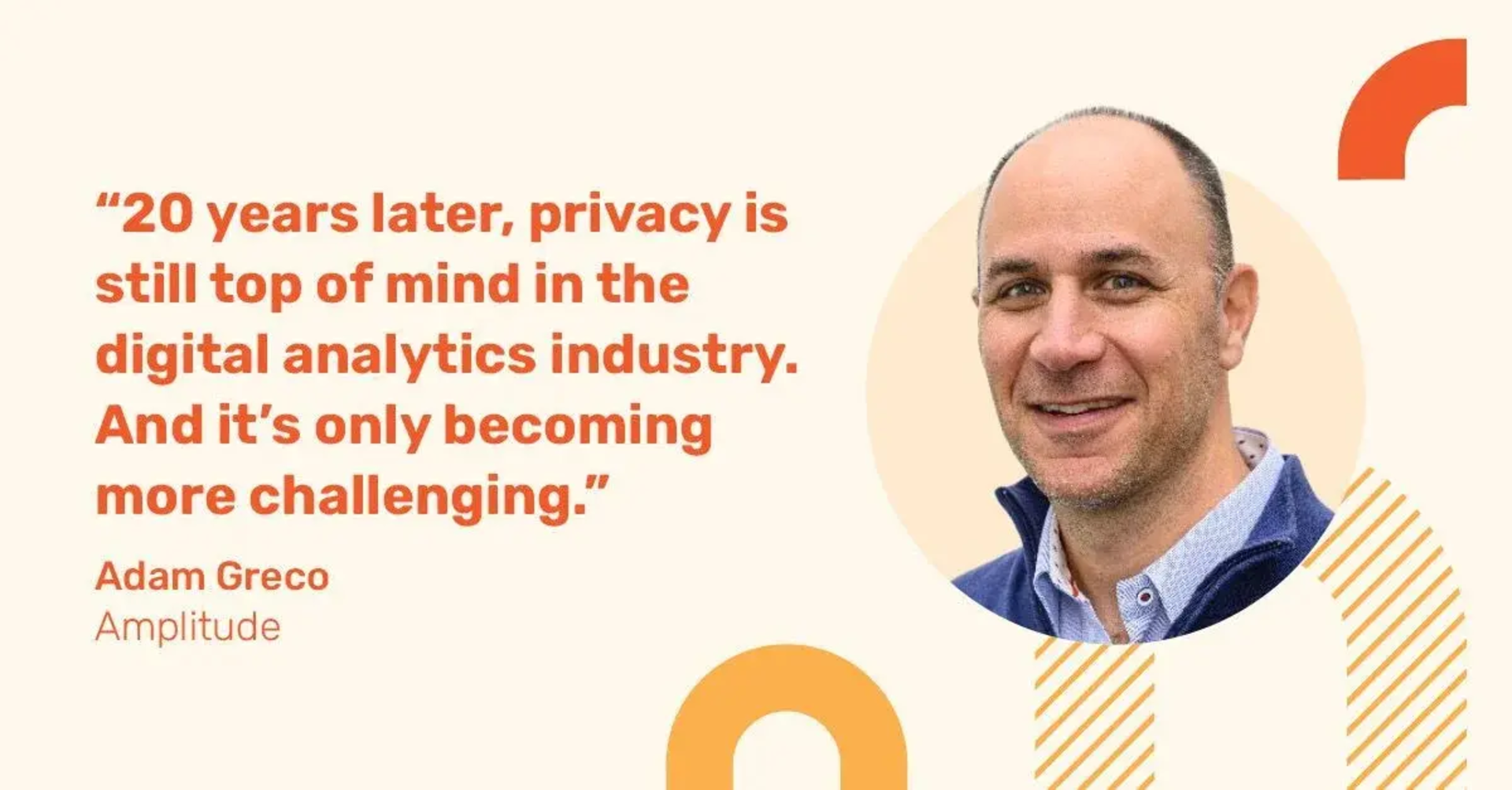
Adam: “By tracking user behavior, digital analytics has been walking a fine line since the very beginning. Now, 20 years later, we’re still working on this, and it’s becoming increasingly trickier. Sometimes, it feels like we’re just waiting for this earthquake to hit and upend everything. Ever since I embarked on my digital analytics journey, I always had this fear that I would be out of a job at any time because of privacy issues.”
“Therefore, I sincerely believe that companies have to be ethical about what they’re doing. For me, digital analytics is first and foremost about creating better customer experiences using data. We’re not here to be creeps that follow you around online. Unfortunately, well-meaning people often get lumped in with bad actors, like Google and Facebook. I often worry that the actions of these companies will eventually bring down our whole industry.”
“Luckily, there are reasons to be cheerful as well. When GDPR came out, for example, I initially worried that we wouldn’t be able to track anything anymore. But over time, we discovered new ways of mapping user behavior that were a lot more ethical, like server-side tracking and focusing on first-party data. In a weird kind of way, a lot of the privacy legislation and guidelines are actually making companies do what they should’ve been doing to begin with, like not relying on third parties.”
“For me, first-party data is the future. After all, why wouldn’t a brand want to have a direct relationship with its users? Moreover, many brands are starting to realize that the ad-supported model is kinda crappy. YouTube already has an ad-free subscription model, and there’s talk of Twitter following suit. Still, even in this case, it’s never a good idea to track too much. It’s just not necessary. If I want to know that you’re interested in my product, for example, I just need to know that you’ve looked at the product page.”
“First-party data is the future: why wouldn’t a brand want to have a direct relationship with its users?”
“I suspect that privacy issues will always be out there, lurking in the background. Eventually, even the EU is going to have to take a step back and say ‘we’ve done everything we can’. If they push it too far, organizations will go out of business. At the same time, I hope that eventually the Googles and Facebooks of this world will be held accountable for their malpractices.”