Services
Consultancy Project-Based Approach Support Training Academy
Accelerators
AI Data Analyst Artificial Intelligence CDP as a Service Customer Data Architecture Data Ideation Workshops Data Maturity Assessment Job Analytics Server Side Tracking
Cases
News
Events
About
Our Values Our Team Our Toolkit Careers
Contact Us
  • News
11 July 2023
2 min read

Four principles for a composable customer data strategy

Composable technology is a highly debated topic, currently at its peak in terms of interest from marketing technology professionals. With the hype come inflated expectations, different interpretations and vendors using it left, right and centre to describe their solutions. In this last episode of our 3-part series, we break it down into the essentials and illustrate the 4 principles for a composable customer data strategy.

Jens Scheerlinck
Data Solutions Architect Jens Scheerlinck

1. Conway’s law:

Any organisation that designs a solution will produce a design whose structure is a copy of the organisation's communication structure.
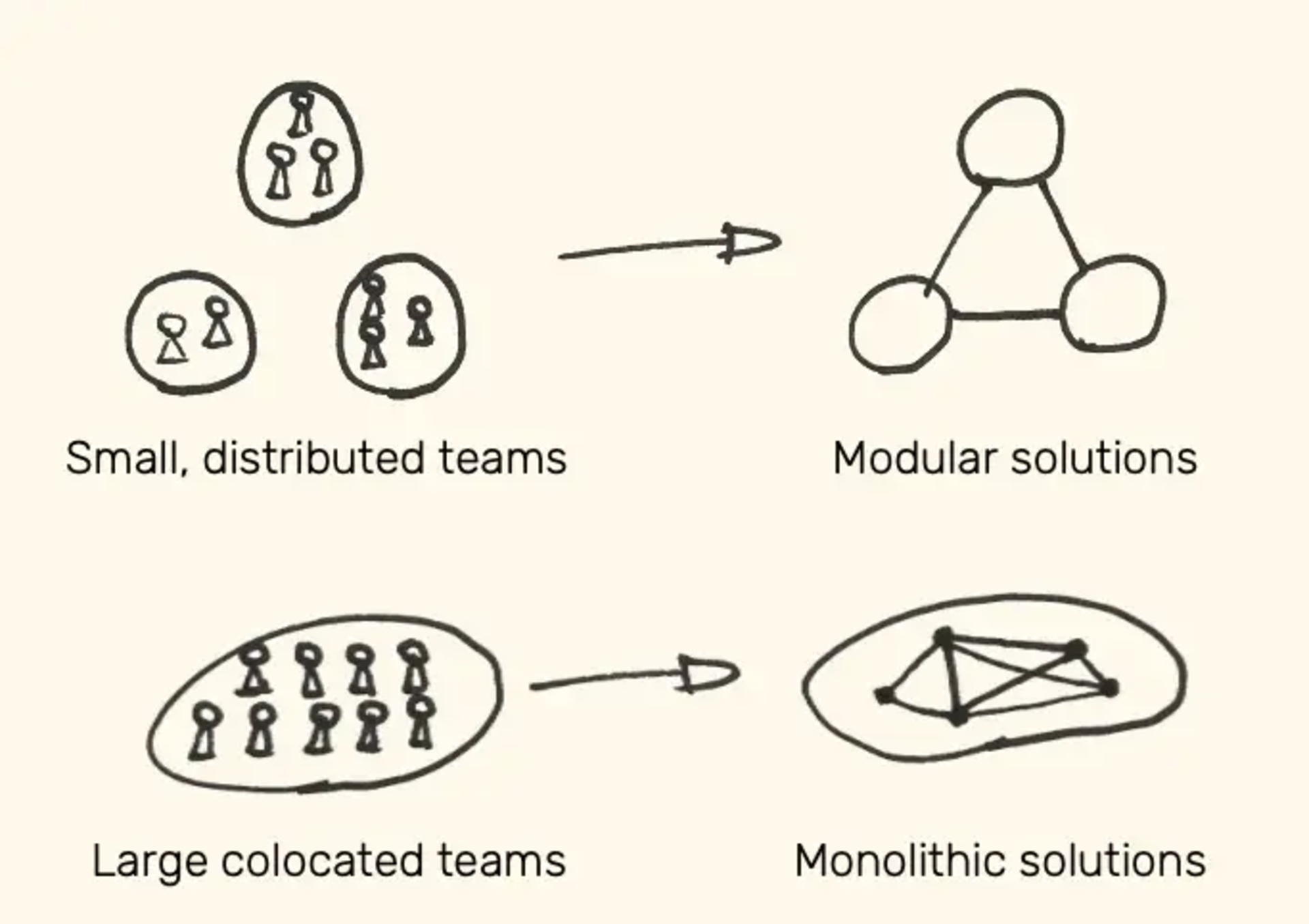
Diagram contrasting small, distributed teams leading to modular solutions vs. large colocated teams leading to monolithic solutions.

2. Focus on intended use and business value.
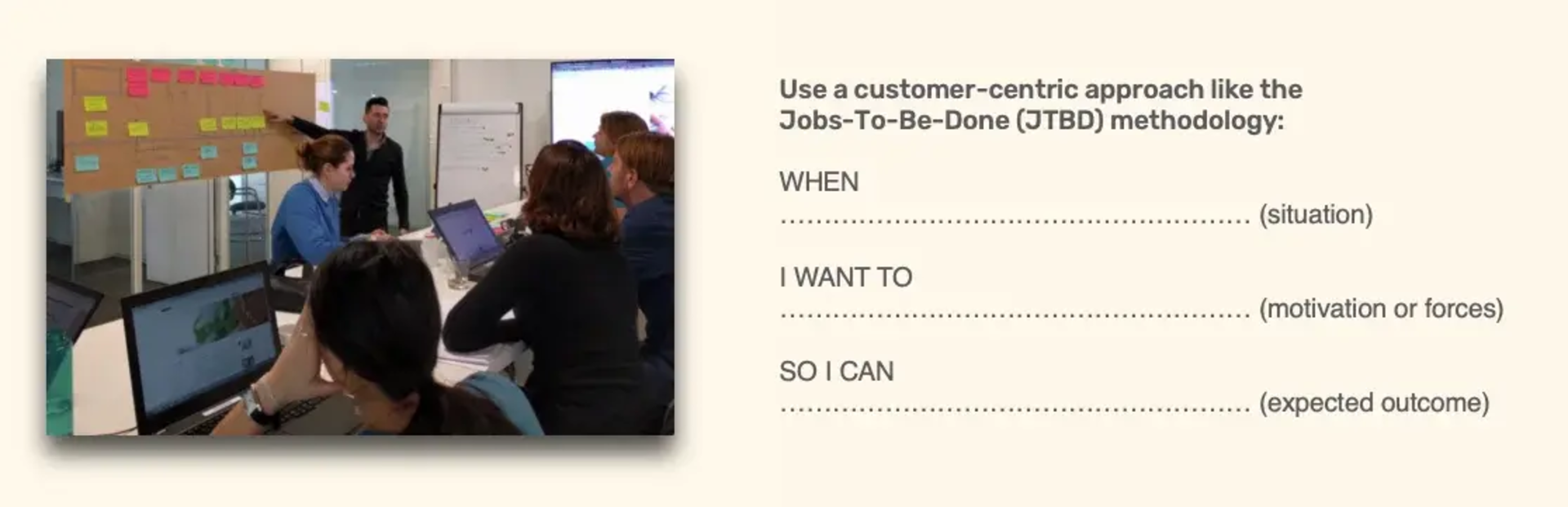
Team meeting with a presenter pointing to a kanban board, and attendees working on laptops.

Don’t go composable because it’s what all the cool companies are doing or because you like a technical challenge. Empower your teams to deliver personalised, privacy-friendly experiences first and look at the right tools for that job. Use a customer-centric approach like the Jobs-To-Be-Done (JTBD) methodology.

Contact us for a Jobs-To-Be-Done workshop!

3. Creative, not destructive approach

Skateboard, scooter, bicycle, and car hand-drawn sketches numbered 1-4.

The flexibility of a composable architecture is perfect for companies with a ‘test and learn’ or ‘fail fast’ ethos. Composable solutions can be used to replace legacy components, but the most critical is they can co-habit, enabling businesses of any size to start building a composable architecture and switch out one solution at a time to avoid disruption. Avoid the pitfall of the big bang approach, trying to change everything all at once.

4. Law of diminishing returns

Graph showing total utility peaking as marginal utility decreases and crosses the x-axis.

The incremental value offered by multiple specialised components must be greater than the increase in total cost of ownership due to incremental complexity (in workflows, integration, and maintenance). The cap will be different for every organisation.

Ready to activate your data?

Ready to embark on a journey of success? Contact us today to discuss your needs. Let's work together to turn your vision into reality.

Reach out, and let's chat.
pencil drawing of two men
  • Contact us
  • Hertshage 10
    9300 Aalst, Belgium
  • welcome@multiminds.eu
  • +32 491 33 11 11
  • Our services
  • Consultancy
  • Project-Based Approach
  • Support
  • Training
  • Our accelerators
  • CDP as a Service
  • Customer Data Architecture
  • Data Ideation Workschops
  • Data Maturity Assessment
  • Server Side Tracking
  • Job Analytics
  • AI Data Analyst
  • Artificial Intelligence
  • Our newsletter
  • Subscribe to our newsletter for the latest news and upcoming workshops.
  • Thank you for subscribing!

©2026 MultiMinds. All rights reserved.

Cookie Policy Privacy Policy

We’re an analytics agency. You know what’s coming.

Honestly? We just want to see how you move through our site so we can make our charts look beautiful and our insights even sharper. It's like a science experiment, and you're our favourite variable.

Necessary cookies help make a website usable by enabling basic functions like page navigation and access to secure areas of the website. The website cannot function properly without these cookies.

anonymous
2 year | HTTP Cookie
Stores the user's cookie consent state for the current domain.
_cfuvid
Session | HTTP Cookie
This cookie is a part of the services provided by Cloudflare - Including load-balancing, deliverance of website content and serving DNS connection for website operators.
_cfuvid
Persistent | HTML Local Storage
This cookie is used to distinguish between humans and bots.

Preference cookies enable a website to remember information that changes the way the website behaves or looks, like your preferred language or the region that you are in.

Analytical cookies help website owners to understand how visitors interact with websites by collecting and reporting information anonymously.

_ga#
1 year | HTTP Cookie
This cookie is a Google Analytics persistent cookie which is used to distinguish unique users.

Marketing cookies are used to track visitors across websites. The intention is to display ads that are relevant and engaging for the individual user and thereby more valuable for publishers and third party advertisers.