CDP use case development and prioritisation
With all the marketing buzz surrounding customer data platforms and how indispensable they are, we risk ignoring one important question: what are they actually used for? As you can imagine, the possibilities are almost endless, which is why proper use case definition and strategic prioritisation are essential for success. The success of a CDP deployment depends on selecting the right use cases straightaway. Here’s how to do it right.

Name it to tame it: CDP use case definition
Your business teams continuously encounter friction: inefficient internal processes, duplicate efforts, communication gaps, misunderstandings, inferior customer experiences, etc. Accurately identifying these friction points is the first and often the hardest step in defining and developing potential CDP use cases.
To properly define a use case, you first need to answer some key questions, including:
What pain point does it address, or which untapped opportunity will it help seize?
What (added) value does it bring to the customer?
What is the ultimate (tactical and/or operational) objective that matters for the business?
What will it take to achieve that goal, both in terms of CDP capabilities and in time and resources?
How complex will it be to implement?
Of course, answering these questions requires some consideration. Here’s where the agile ‘user stories’ methodology comes in handy. The general idea is to start from a functional need coming from a user or (potential) customer. A user story is always written down as a variation of the following:
WHEN … (a specific situation) or AS A … (role)
I WANT TO … (motivation)
SO THAT … (expected outcome)
For example:
As a returning webshop visitor, I want to get recommendations for accessories that are compatible with products I’ve bought earlier, so I don’t buy the wrong product.
As a customer, I want to have control over my personal data, so I can update my information and preferences and request the deletion of my data if needed.
As a customer support agent, I want to have real-time access to customer profiles and their recent interactions across various channels (email, chat, phone), so I can quickly resolve their issues and provide better service.
As a sales representative, I want to have an overview of each customer’s interactions with our company, including their past purchases, support tickets, and communication history, to provide more personalised and informed sales conversations.
User stories can then be further refined with another methodology, called service blueprints. These offer a schematic, layered overview of the data, data sources and tools needed to make the user story a reality.
Examples of CDP use cases
Activation
Suppress existing customers from lead-generating ads
Optimise remarketing campaigns by creating audiences based on RFM parameters
Leverage predictive audiences in ad tools to make intelligent targeting decisions
Personalisation
Offer (known) visitors a personalised experience on the landing page of your website
Personalise emails with on-to-one content recommendations
Personalise inline messaging on your website
Customer data
Build specific audiences based on single user attributes or content affinity
Build lookalike audiences to optimize return on ad spend and generate high-quality leads
Order please: use case prioritisation
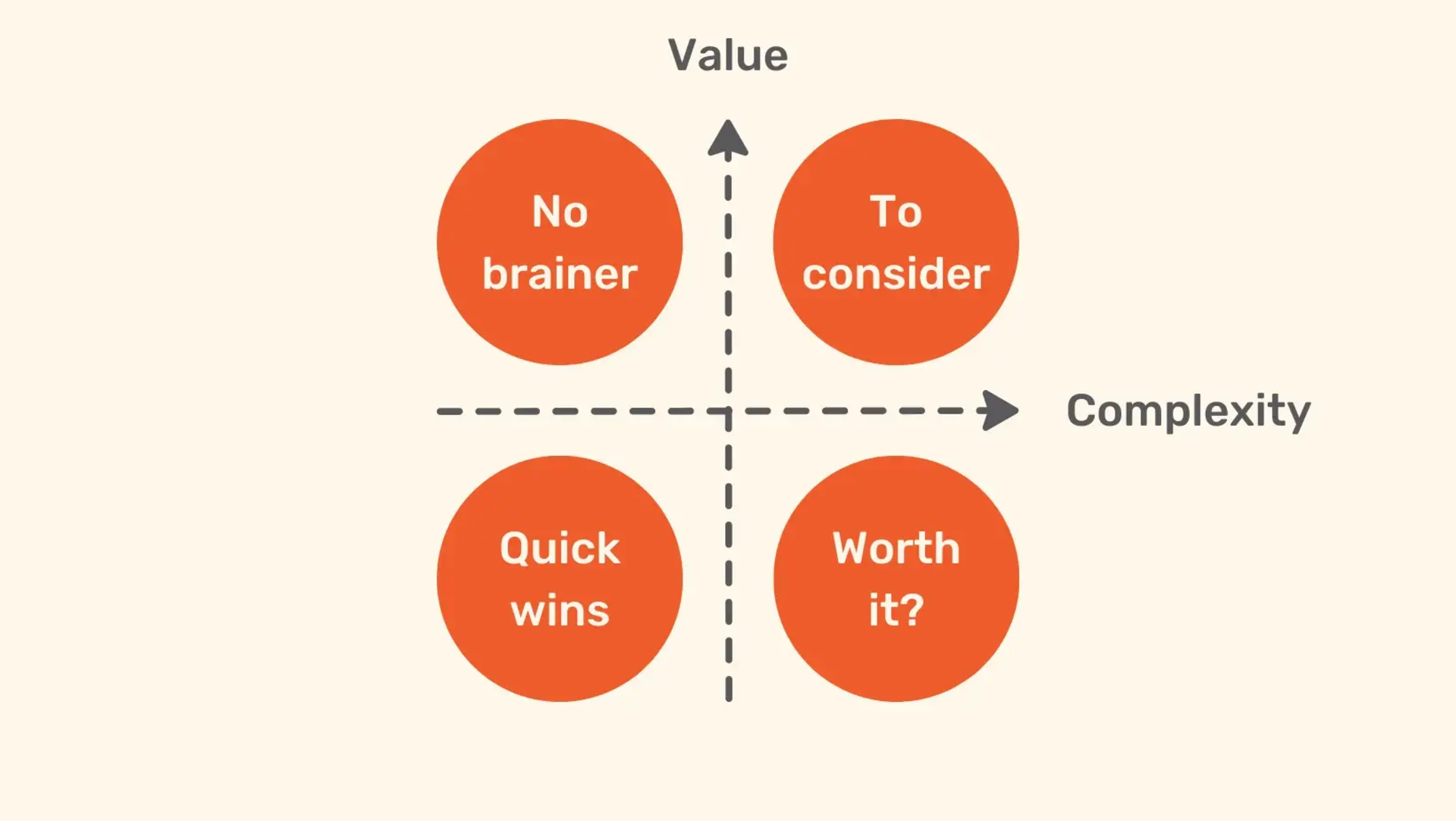
Once you have defined and listed your use cases, you will need to prioritise them according to their business impact and level of complexity.
Things to consider are:
the business impact of the use case objective, e.g., operational efficiency gains and/or revenue increases
the impact on the customer experience and overall customer satisfaction
the required budget, people, development time, and other resources
compliance with data privacy regulations
At MultiMinds, we use a simplified framework that takes into account value and complexity.
Why use case prioritisation matters
As we’ve discussed before, implementing a CDP is a substantial investment, both in terms of time and resources. To ensure successful deployment, you have to prioritise use cases that focus on the most critical business objectives. Beyond that, prioritisation also helps with:
Resource allocation: Focus on high-impact use cases first to maximise the return on investment and avoid spreading your efforts too thin.
Getting management buy-in: Address key use cases early on to demonstrate the value of the CDP and build momentum for more extensive deployments.
Goal alignment: Ensure the CDP implementation aligns with your organisation’s strategic goals and objectives and enhance overall business performance.
Risk mitigation: By tackling use cases systematically, you can identify and address potential roadblocks or challenges before they become significant issues.
Scalability: A phased approach allows you to scale up your CDP usage gradually, ensuring it evolves along with your organisation’s changing needs.
After executing the initial two or three use cases, you’re finally done and you can count your riches and take a well-deserved nap. Just kidding, of course: these are just the start, as you continuously optimise existing use cases, for example by reevaluating audience segments. You’re also very likely to implement new use cases on a regular basis to create even more value for your business. The point is: much like love, a CDP is also a verb, a doing word. It’s an ongoing process that evolves along with your business.