Beyond the Buzz: audience modeling
Lookalike audience modeling and evolutionary AI are revolutionizing old-school customer segmentation. Here’s what you should know.
As unique as everyone else
Reach the right customer in the right place at the right time. But who is the ‘right customer’, exactly? Marketeers have been trying to answer this age-old question for time immemorial. Today, exponential increases in computing power and data are creating exciting new opportunities for marketeers to better understand, categorize and grow their audiences. Step into the amazing world of audience modeling – but beware of key hurdles and misconceptions.
In short: it’s the art of understanding and categorizing your audience. The idea is to use customer data to create a ‘model’ or profile of your ‘audience’ that will help you become more customer centric.
Lookalike audience modeling
Old-school audience segmentation is pretty straightforward: users with a common intent and value are grouped together – and shown the same ads or recommendations. When creating their segments, however, marketeers often rely heavily on assumptions. As a result, the segmentation is only as useful as the marketeer’s ability to properly assess the business context.
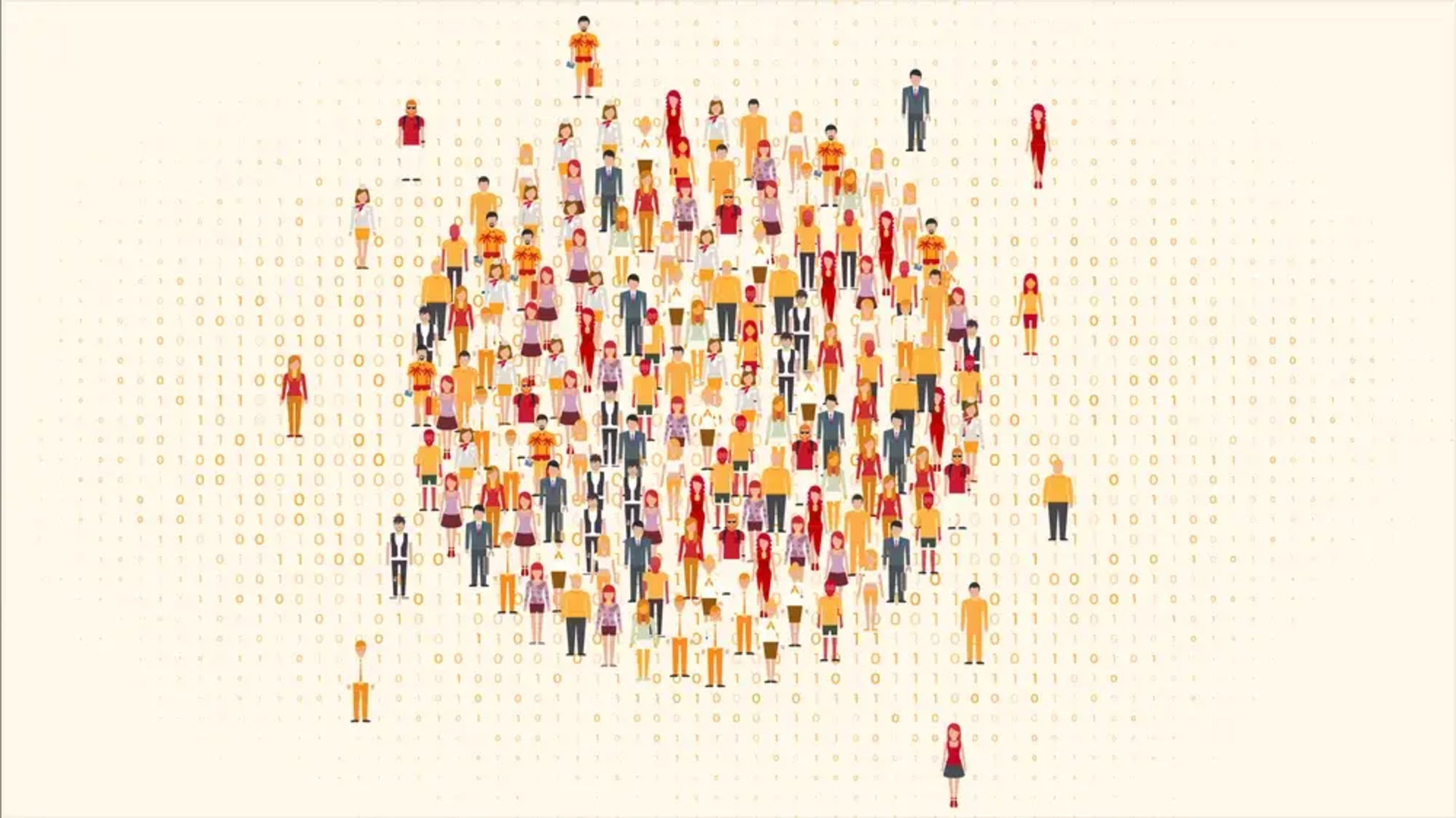
This is why segmentation performed by AI or smart algorithms is becoming increasingly popular. An example is lookalike audience modeling. In this approach, marketeers create a ‘seed audience’: a selection of people within their existing database who have already converted in the desired way. By determining the attributes or parameters that offer the highest predictive value, the AI or algorithm looks for people with matching profiles in a much larger reference set.
Audience modeling is the art of understanding and categorizing your audience through the power of AI.
Not only does this help marketeers to make more relevant segmentations, but it can also help businesses reach new prospects that have the same key characteristics as their very best customers. By finding audiences that the marketeer would otherwise be unable to identify, lookalike modeling becomes an indispensable marketing tactic for successful new customer acquisitions.
Misconceptions, hurdles and controversies
Lookalike audience modeling relies on lots and lots of data. All of this data needs to be collected, processed, and managed. A data management platform, in other words, is indispensable in aggregating and unifying data from different sources to create a clear holistic view.
To achieve consistently strong results, the lookalike model needs to be maintained over time and refreshed regularly. The longer certain models run, the more they learn about your audience and the more accurate they will become.
“I only need first-party data.” Many marketeers think customer data from their own CRM, transactions or website traffic is enough to obtain scale. Let us be the first to burst that bubble: you’ll need a lot more for successful results.
“The more data I have, the better.” A large amount of data only helps you understand your target audiences better if you have the resources to collect, process and store it. Marketeers need to ask themselves which data is relevant for their campaigns.
The next step: evolutionary AI
The next step in audience modeling is evolutionary AI – which sounds scarier than it is. The idea is to let the AI create its own customer segmentation and then continuously test it by adding and removing people to achieve an optimized set of parameters. In this case, the need for human intervention falls away completely.
Today, evolutionary AI is often met with resistance. Not only is it a complex and incomprehensible process when you drill down into it, it also takes away the last bit of agency from the marketeer. However, this type of data science application shows just how technical the role of digital marketeer is quickly becoming, and how important it is for marketing to collaborate closely with the IT department.